When the Home Becomes Harder to Use
Your Housing Needs Can Change Even When You Still Like the House
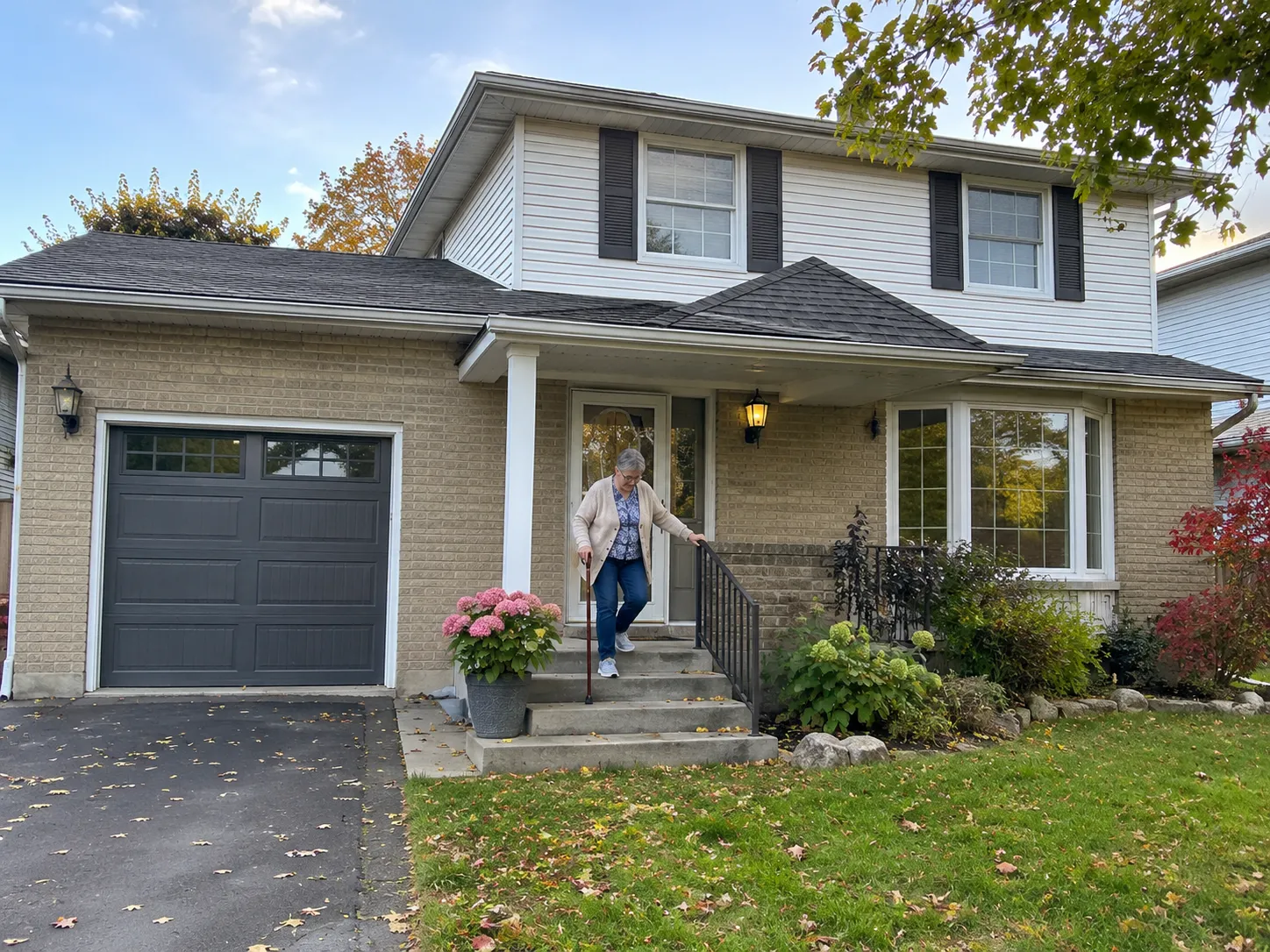
A property that worked well for years may become less practical after changes in health, strength, balance, mobility, energy, or day-to-day independence. Stairs, exterior steps, large yards, narrow rooms, older bathrooms, and ongoing maintenance can all become more difficult to manage.
We Buy Ontario Houses works with Ontario homeowners who decide that moving to a different property would better fit their current needs. We buy houses directly in their existing condition, including homes that need repairs, updates, cleaning, or accessibility improvements the seller does not want to complete first.
You can request an offer before committing to renovations or deciding exactly where you will move next. The goal is to give you another selling option to compare without turning the current property into another major project.
Call 905-667-6512 or request a cash offer online to tell us about the property and the timing you are considering.

Start With Daily Life
Pay Attention to the Parts of the House You Have Started Avoiding
A change in how you use the property can be more important than its size or market value when deciding whether the home still works for you.
You may notice that you use the basement less, avoid carrying laundry between floors, postpone yard work, spend most of your time on one level, or depend more heavily on family members for routine maintenance.
Those changes do not automatically mean the property should be sold. They do provide useful information about whether the existing layout still supports the way you want to live.
Compare the cost and practicality of adapting the current house with the cost and practicality of moving somewhere that already better matches your needs.
The Problem Is Often the Property Itself
What Can Make a Home Harder to Manage
The reasons are different for every homeowner, but certain parts of a property can become noticeably more difficult when mobility or health needs change.
Multiple Levels
Stairs Become Part of Every Routine
Bedrooms, laundry, bathrooms, storage, and entrances on different levels can make ordinary daily tasks more demanding than they once were.
Exterior Work
The Yard Requires More Maintenance
Grass, leaves, snow, ice, gardens, gutters, exterior repairs, and seasonal upkeep can make a larger property less appealing to maintain.
Older Layouts
Rooms May Not Be Easy to Navigate
Narrow doorways, tight bathrooms, raised thresholds, steep steps, and limited main-floor living space can affect how practical the home feels.
Ongoing Repairs
The House Still Needs Attention
An aging roof, plumbing problem, worn flooring, exterior work, or unfinished project can become harder to deal with when your priorities have changed.
Modify or Move?
Compare Accessibility Improvements With the Cost of Moving
Some properties can be adapted with railings, ramps, bathroom modifications, improved lighting, a main-floor bedroom, different flooring, or other accessibility changes.
Other homes would require extensive structural work to create the layout the homeowner actually wants.
The better choice depends on the house, the improvements required, your budget, your long-term plans, and whether you still want to remain in the property.
Do Not Renovate Automatically
A Major Accessibility Project May Not Be Necessary Before Selling
If you have already decided that you would rather live in a smaller, single-level, lower-maintenance, or more accessible property, investing heavily in modifications to the current home may not fit your plan.
You can request an as-is offer before installing new flooring, rebuilding entrances, modifying bathrooms, replacing stairs, or completing other work solely to make the property easier to market.
We Buy Ontario Houses evaluates the house in its current condition. That gives you a direct-sale number to compare with the cost and expected benefit of renovating before listing.
If modifying the property makes more sense, you can choose that option instead. Requesting an offer does not require you to sell.
The Condition of the Property Still Matters
Sell As Is Without Taking On Repairs You No Longer Want to Manage
Mobility and health changes can occur at the same time an older home starts requiring more work. The roof may need attention, flooring may be worn, a bathroom may be outdated, or routine exterior maintenance may have accumulated.
A direct cash sale allows those conditions to be evaluated without requiring you to complete every repair first. This can be especially useful when managing contractors, moving materials, cleaning rooms, or preparing for repeated showings would be inconvenient.
Our major repairs page explains more about selling an Ontario property that needs substantial work.
The offer reflects the existing condition of the house, so you can compare selling as is with the expected cost and potential return from repairing it first.
Keep the Process Manageable
Do Not Put Yourself at Risk Preparing the Property
You do not need to climb ladders, move heavy furniture, clear difficult storage areas, or enter parts of the property that are hard for you to access simply to request an offer.
Tell us what you know about the house and which areas may be difficult to reach.
Important personal belongings should still be handled appropriately before closing, but the property does not need to look like a staged listing before we evaluate it.
Think About the Next Property Too
Selling Only Helps if the Next Home Fits Better
Before deciding to move, consider which features would actually make daily life easier. A smaller house is not automatically more accessible, and a condominium is not automatically maintenance-free.
Consider stairs, parking, elevators, entrances, bathrooms, laundry, outdoor maintenance, transportation, proximity to family, and the monthly cost of the next property.
A clearer picture of what you need next can help determine whether selling the current house solves the problem you are trying to address.
A Sale That Does Not Begin With Renovations
How the Direct Home Selling Process Works
Start by telling us about the house as it exists today and the type of timeline that would be practical for you.
Step 01
Describe the Property
Provide the address, property type, condition, occupancy, known repairs, accessibility concerns with the house, and the timeline you are considering.
Step 02
Let Us Review the House
We evaluate the property in its current condition without requiring you to renovate it or prepare every room for public showings.
Step 03
Compare the Offer
Review the proposed purchase price and closing terms alongside the cost and timeline of modifying, repairing, or traditionally listing the property.
Step 04
Plan the Closing Around the Move
If you decide to sell, your lawyer handles the legal transfer while you coordinate the belongings and moving arrangements that apply to your situation.
When Staying May Make More Sense
The Right Modifications Can Sometimes Make the Current Home Work
If you still like the location, can comfortably maintain the property, and the necessary improvements are practical, adapting the existing house may be worth exploring.
The changes could be relatively modest, or they could require more significant renovation depending on the property and your needs.
Compare the cost of those improvements with the financial and practical cost of moving before assuming that one option is automatically better.
When Moving May Fit Better
A Different Home May Solve More Than One Problem
Moving may make more sense when the current house has multiple levels, major maintenance needs, unused space, an inconvenient location, or expensive modifications that you do not want to complete.
A new property may also allow you to combine accessibility goals with downsizing, lower maintenance, or moving closer to family.
Our retirement and downsizing page covers additional considerations when the goal is a smaller or easier-to-manage home.
Moving Closer to Support
Location Can Become More Important Than the House Itself
Some homeowners sell because they want to live nearer to family, transportation, services, or another support network.
That may mean moving across town, to another Ontario community, or out of the province.
Our relocation page explains how a direct home sale can fit around a move with a more defined timeline.
Do Not Overlook the Financial Side
Compare the Current Home With the Complete Cost of the Next One
Selling a larger or older home can reduce some responsibilities, but the next property still comes with expenses. Compare expected sale proceeds with the cost of the next home, rent, condominium fees, property taxes, insurance, moving expenses, storage, and any accessibility modifications the new property may require.
If you own the current property with a mortgage, your lawyer can obtain payout information and explain the amounts that need to be addressed through closing.
A direct cash offer can provide one concrete number for the comparison. You can then decide whether the proposed sale actually supports the housing change you are considering.
We Buy Ontario Houses purchases properties. We do not provide medical, legal, financial, or accessibility-planning advice.
Serving Homeowners Across Ontario
Sell a Home That No Longer Fits Your Mobility Needs
A property that becomes difficult to use in one Ontario community can create many of the same challenges as a similar home elsewhere in the province.
We evaluate the specific house, condition, location, and selling situation rather than assuming every homeowner needs the same solution.
Homeowners can contact us about selling after health or mobility changes in Oshawa, Sudbury, and Barrie. Each priority location has a dedicated page with more information about selling directly in that community.
We also buy houses in Toronto, Mississauga, Hamilton, Guelph, Brantford, and London.
Our service area extends through Waterloo Region and Niagara Region, including Kitchener, Waterloo, Cambridge, St. Catharines, Welland, and Niagara Falls.
Visit our Ontario areas served page for more information about where We Buy Ontario Houses purchases houses.
The Timing Should Work for You
You Can Explore a Sale Before a Move Becomes Urgent
You do not need to wait until living in the house becomes extremely difficult before learning what your selling options are.
Requesting an offer earlier can give you time to compare staying, modifying the property, listing with an agent, selling directly, downsizing, or relocating closer to family.
It can also provide more time to organize belongings and plan the next housing arrangement without trying to make every decision at once.
Knowing the direct-sale option does not require you to use it.
Another Person Helping With the Sale?
Make Sure the Property Owner Is Included in the Decision
Family members may help gather information, arrange appointments, communicate with buyers, or organize a move.
The legal owner or properly authorized person still needs to participate as required for the sale and closing.
An Ontario lawyer can explain signing authority or other legal requirements when someone else needs to assist with the transaction.
Find Out What the As-Is Option Looks Like
Talk With We Buy Ontario Houses About Selling a Home That Has Become Harder to Manage
If health or mobility changes have made your Ontario property less practical, We Buy Ontario Houses can evaluate the house in its current condition and provide a direct cash offer.
You can compare that offer with modifying the home, listing traditionally, downsizing, or moving to another property before deciding what fits your situation.